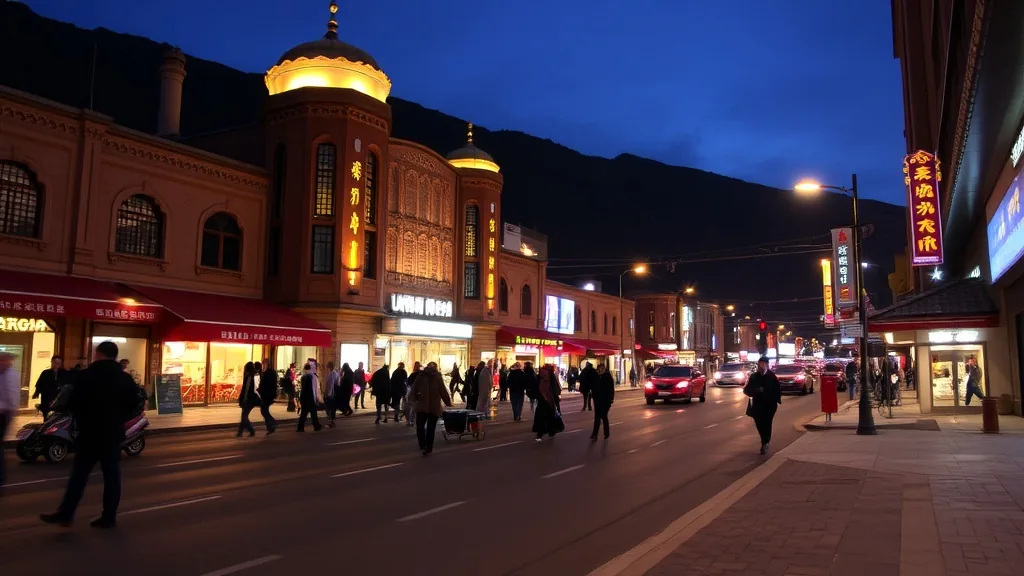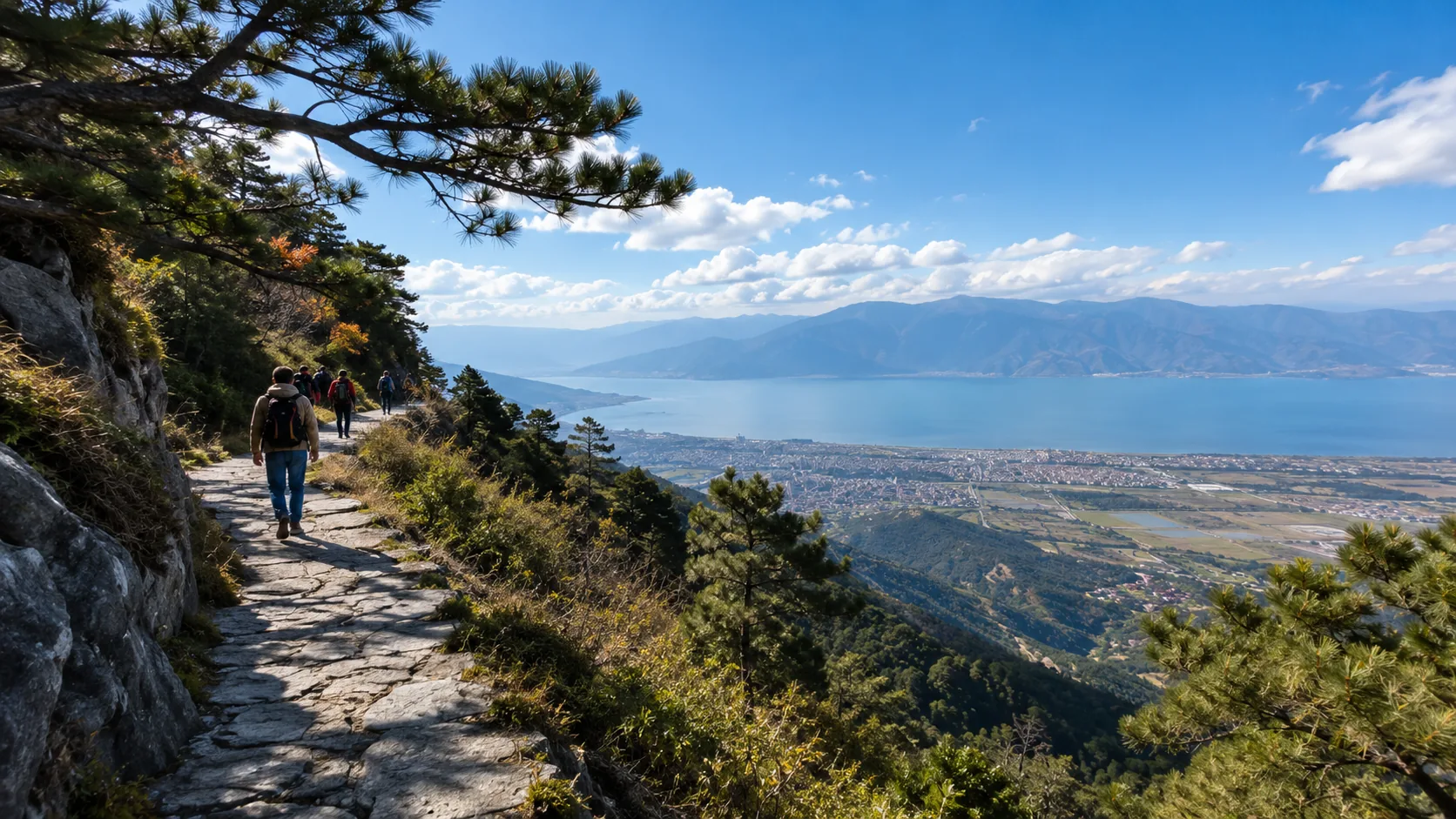



How big is the temperature difference between morning and evening in Xinjiang? There is no fixed number that applies region-wide.The mountainous areas of northern Xinjiang and the cities of southern Xinjiang, the Ili Valley and Sailimu Lake, Kashgar and Taxian County, the Turpan Basin and high-altitude areas all have different weather. The highest temperature cannot represent the feeling in the early morning, at night and by the lake. Visitors should check the maximum temperature, minimum temperature, wind and precipitation according to specific locations, and then dress in layers based on activity time and personal cold tolerance.
How big is the temperature difference between morning and evening in Xinjiang?
The commonly referred to as “morning and evening temperature difference” can be understood by subtracting the lowest temperature from the highest temperature forecast for the day. However, the lowest temperature may not occur exactly when you get up, and the highest temperature is not equal to the feeling under direct sunlight. Cloud cover, rainfall, high winds and sunshine can all change the actual experience.
Taking the short-term forecast released by the China Weather Network at 18:00 on July 27, 2026 as an example, Kashgar is 34℃/18℃ and Taxkorgan is 22℃/8℃. The forecast temperature differences between the two places on that day are 16℃ and 14℃ respectively; what is more noteworthy is that the minimum temperature difference between the two places is 10℃. This only illustrates the difference within that date and within that forecast time frame, and does not represent the entire summer.[1]
Similarly, in the Yili forecast released at 18:00 on July 28, 2026, Yining is 31℃/17℃ and Zhaosu is 23℃/11℃. In the same Ili Prefecture, the highest and lowest temperatures in the city and in areas with higher altitudes are obviously different. You should check the latest forecast again before setting off, and do not copy the numbers in this article.[2]
Historical climate averages are used to help understand regional differences and are not a substitute for weather forecasts for specific travel dates.
| Common judgment methods | Existing problems | A more reasonable approach |
|---|---|---|
| Only view the weather in Urumqi | cannot represent other regions | Check daily accommodation and tourist locations separately |
| Only view the highest temperature of the day | Ignore early morning and nighttime | View the lowest temperature at the same time |
| Only look at the temperature numbers | Ignore wind and rainfall | View temperature, wind and precipitation simultaneously |
| Prepare a set of clothes for the entire Xinjiang | The region span is too large | Prepare in sections according to the route |
| If you see a big temperature difference, wear heavy clothes | It is easy to add invalid baggage | Multi-layer combinations that are easy to add or remove |
Why do the temperature differences in different areas of Xinjiang vary greatly?
Xinjiang covers an area of about 1.6649 million square kilometers. The landforms include the Altai Mountains, Tianshan Mountains, Kunlun Mountains, Junggar Basin, Tarim Basin, Ili Valley and Turpan Basin, each with its own environment. Such a large geographical and terrain span determines that cities, river valleys, grasslands, lakesides, mountains and plateaus cannot share the same temperature conclusion.[3]
When it is clear and dry, the temperature rises during the day and the temperature drops at night may be more obvious; clouds and rainfall will change the temperature rise and fall rhythm. It also depends on the wind at the lakeside and at the mountain pass. If the temperature is the same, you may feel cooler if you stay in a strong wind. When crossing low-altitude cities and plateaus in one day, clothing often needs to be added or removed multiple times.
How to wear clothes in the morning and evening in Northern Xinjiang and Altay?
Forecasts in Altay or Burqin urban areas cannot directly represent Kanas and Hemu. The forecast of China Weather Network on July 28, 2026 shows that Altay will be 25℃/12℃ and Burqin will be 26℃/15℃. However, the weather in scenic spots still needs to be checked separately; urban weather station data should not replace mountain accommodation point data.[4]
General tour at noon on a sunny day
You can use breathable short-sleeved or thin long-sleeved bases, wear trousers that are convenient for walking, and put the thin jacket in your carry-on bag or car. It may be warm under the sun, so dress accordingly when entering the shade, viewing platforms or staying for a long time.
Viewing in the early morning or evening
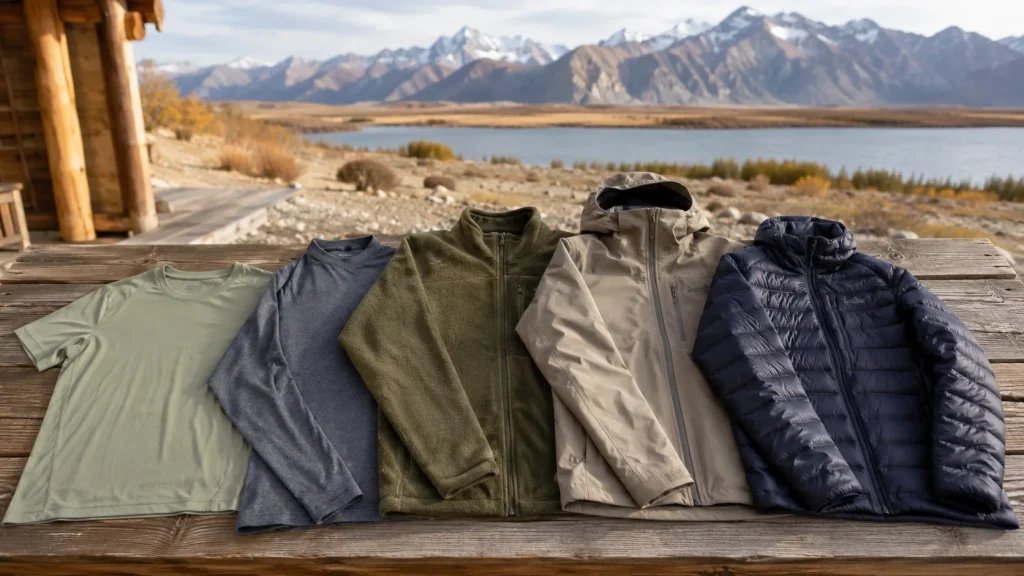
When going to Sanwan, Hemu Observation Deck or waiting for sunset, it is recommended to wear a long-sleeved base layer, add a warm mid-layer such as fleece or a thin sweatshirt, and prepare a windproof outer layer. The thermal insulation layer is responsible for retaining heat, and the windproof layer is responsible for reducing the impact of wind. The two functions are different.
Rain or significant cooling
Use a warm mid-layer and a rain-proof outer layer, and replace shoes and socks promptly if they get wet. A raincoat does not necessarily keep you warm, and fleece cannot replace rain protection. Accommodation in a mountain cabin does not necessarily mean that it will be cold indoors. The judgment should be based on the location and facilities of the accommodation.
How to wear clothes in Ili Valley, grassland and Sailimu Lake?
Yining urban area cannot represent the entire Yili. Grasslands or mountainous areas such as Nalati, Zhaosu, Qiongkushtai and other valley cities have different altitude, wind and rainfall conditions. For Sailimu Lake, special attention should be paid to the lakeside wind, stay time and whether to watch the sunrise and sunset.
| scene | Basing layer | Thermal layer | Outer layer |
|---|---|---|---|
| Yining city daytime | Breathable short sleeves or thin long sleeves | Usually standby | The thin coat is determined according to the forecast |
| Grassland general tour | Short or long sleeves | Thin sweatshirt or fleece as backup | Wind or rainproof layer |
| Sailimu Lake noon | Breathable base layer | Depends on wind and weather | It is recommended to prepare a windproof layer |
| Sunrise and sunset by the lake | Long sleeve base | Fleece or lightweight thermal layer | Windproof jacket |
| Rainy weather in the grassland | Quick drying or comfortable base | Thermal mid layer | Rainproof outer layer |
The above are collocation examples, not mandatory standards. The clothing needs are different between getting off the car for a short time at noon and shooting for an hour by the lake in the evening. When taking photos in a dress, keep pants and quick-on outer layers handy and don’t endure long periods of wind or low temperatures.
How to deal with the temperature difference between morning and evening in southern Xinjiang cities?
Kashgar, Kuqa, Aksu and Hotan may feel hotter and sunnier during the day in summer. Breathable short-sleeves, sun-protective thin long-sleeves and loose trousers are more commonly used for urban walking instead of heavy jackets. However, “daytime heat” does not mean the same temperature throughout the day. You should still check the minimum temperature and wind before visiting the ancient city at night.
The elderly and children may need a light jacket when entering an air-conditioned vehicle, restaurant or hotel from hot outdoors. When there is sand or strong wind, clothing should be both protective and breathable. The logic of urban dressing should not be directly applied to high-altitude areas such as Ta County.
Why do I have to readjust my clothes when traveling from Kashgar to Ta County?
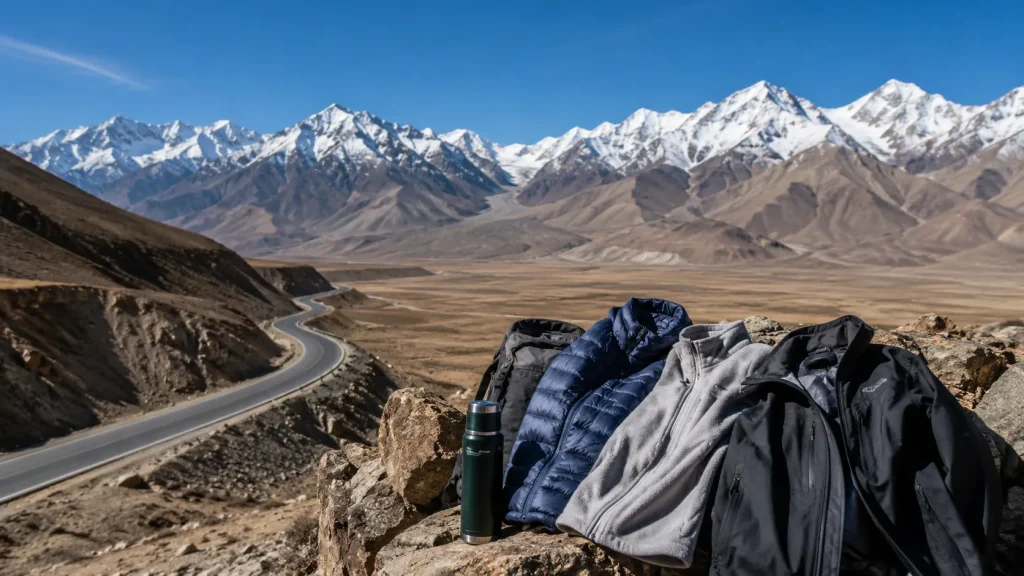
The urban area of Kashgar, along the way to Taxian County, Baisha Lake, Karakul Lake, Taxian County and higher mountain passes are not the same experience. Even though Kashgar is hot during the day, keep long sleeves, a warm mid-layer and a wind-proof outer layer as the altitude rises, cloud cover and wind change.
Departing from Kashgar in the early morning and returning in the evening is different from staying in Ta County. The minimum temperature exposure time is different. Thin, compressible clothing is more suitable for adding or removing clothing as you travel; the elderly, children and tourists who are afraid of the cold can keep an extra layer as a spare. The plateau has strong sunshine, so sun protection and warmth need to be prepared at the same time.
Clothing cannot solve the physical discomfort caused by high altitude. When you have headache, nausea, obvious fatigue, respiratory discomfort, or symptoms continue to worsen, you should not simply judge that you are “not wearing enough clothes.” You should stop rushing and seek professional medical help in a timely manner, and do not make a diagnosis on your own.[5]
It’s so hot in Turpan and Dongjiang, do you still need to dress in layers?
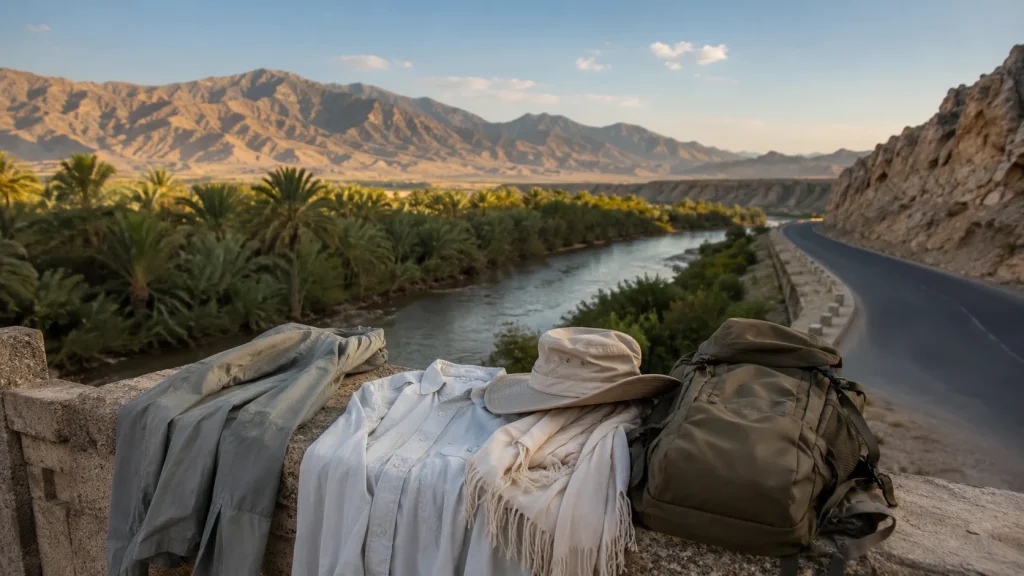
Needed, but the focus is different. Turpan can be very hot during the day in summer, so ventilation, sun protection, hydration and reducing sun exposure are all important. The 18:00 forecast of China Weather Network on July 28, 2026 shows that Turpan will be 36℃/24℃. This is a single-day forecast and does not represent the entire summer; you should still check the specific date whether you need a coat in the evening.[6]
- Choose breathable short sleeves or thin long sleeves, loose pants and a sun hat;
- Do not wear thick, non-breathable clothing for sun protection;
- Prepare a thin jacket in the car to deal with air conditioning and cross-regional movement;
- Avoid prolonged exposure to the sun during high temperature periods and be prepared to drink plenty of water.
When traveling from Turpan to Urumqi, Tianshan Mountains or other areas, you should check the destination forecast again. If you experience obvious physical discomfort, you should enter a cooler environment, stop further exposure to the sun, and seek help.
Itinerary tips:If you are not sure what kind of clothing you need to prepare for your route, you can provide the travel date, destination, accommodation location each night and the status of your companions to a travel consultant. The consultant will give you more specific layered clothing suggestions based on your daily itinerary.
How should you dress in layers when traveling in Xinjiang?
Dressing in layers is not about wearing three pieces at all times. It is about letting clothes take on their own functions, adding more when needed and putting away when not. Compared with a thick coat, a multi-layer combination is more suitable for switching between cities, grasslands, lakeside and plateaus.
First layer: close-fitting or base layer
Short sleeves, thin long sleeves, quick-drying tops, or comfortable cotton clothing can all serve as an all-day foundation. Quick-drying materials are easy to wick away sweat. Cotton clothing is comfortable for daily use but dries slowly after getting wet. It should be selected according to the amount of activity.
Second layer: warm mid-layer
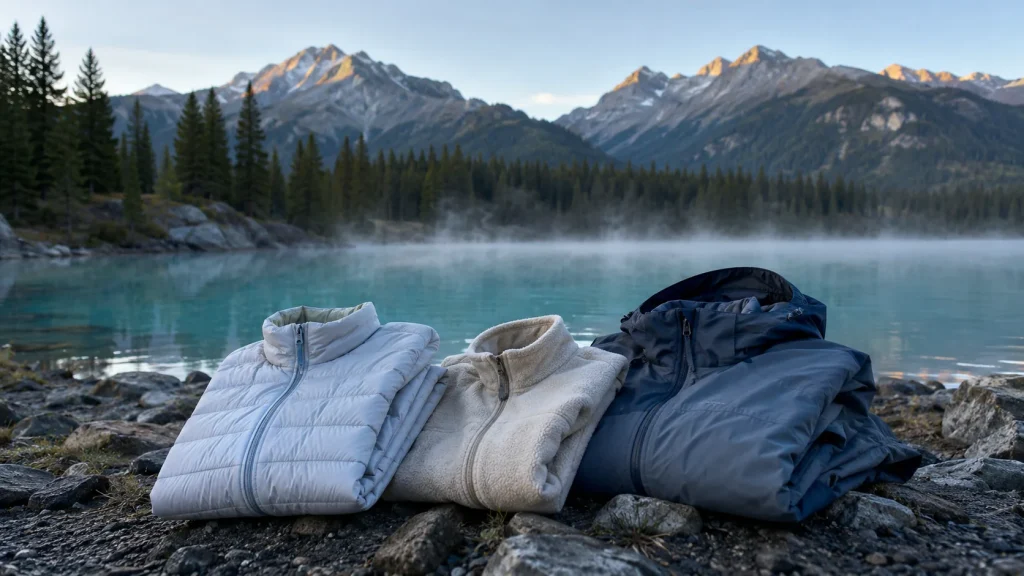
Thin sweatshirts, fleece or other lightweight warm clothing can be worn quickly in the morning, at night, after rain, and when entering mountains, lakes and plateaus.
Third layer: Windproof or rainproof outer layer
Used to reduce the impact of strong winds or cope with rainfall. Being windproof does not mean keeping warm, and being rainproof does not mean keeping warm. The performance of different products varies greatly, so you should check the actual product description.
Backup thermal layer
Mountain accommodation, sunrise and sunset by the lake, the Pamir Plateau, itineraries from September to October, as well as the elderly, children or those who are particularly afraid of the cold, can add a light down jacket or similar easy-to-store thermal layer. Can you refer to it if necessary?Xinjiang summer down jacket preparation suggestions。
How to combine clothes in different weather scenes?
| Travel scene | Base layer | Thermal layer | Wind or rainproof layer | Key reminder |
|---|---|---|---|---|
| Sunny day in the city | Short sleeves or thin long sleeves | Usually standby | Decided by wind strength | Pay attention to sun protection |
| Kanas early morning | Long sleeve base | Fleece or lightweight thermal layer | Windproof outer layer | Not only look at the highest temperature at noon |
| Salim Lake strong wind | Comfortable base layer | Determined based on the lowest temperature | Windproof layer is important | Feel the impact of wind on the lakeside |
| It rains in Ili grassland | Quick drying or thin long sleeves | Thermal mid layer | Rainproof outer layer | Clothing becomes more uncomfortable when it gets wet |
| Kashgar city daytime | Breathable short sleeves or thin long sleeves | Normally worn | Thin coat for spare use | Sun protection and hydration |
| Ta County and Plateau | Long sleeve base | Fleece or lightweight thermal layer | Windproof layer | Also pay attention to sun exposure |
| Turpan daytime | Breathable thin clothing | Normally not required | Light sun protection layer | Avoid being heavy and airtight |
| Vehicle or air-conditioned room | Daily base | Thin coat for spare use | Normally not required | Elderly and children adjust according to body feeling |
The above are matching ideas, not fixed dressing standards. The actual choice should be based on the travel date, specific location and the latest weather forecast.
When should you add or take off clothes in a day?
Start early in the morning
View the lowest temperature. Wear a thermal layer first in mountainous areas and plateaus, and don’t just wear short sleeves in the early morning because the temperature will heat up at noon.
After the temperature rises in the morning
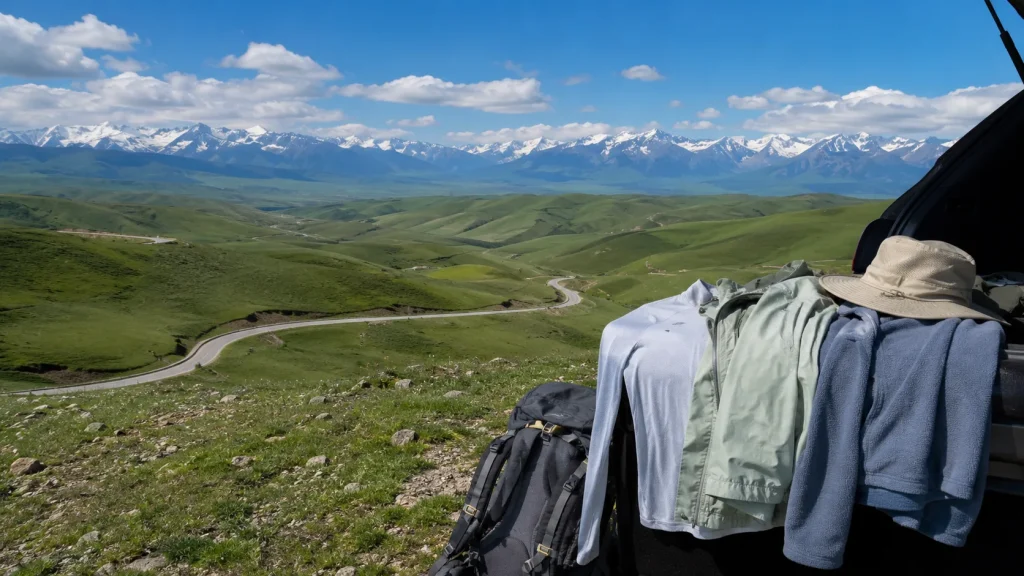
Reduce clothes layer by layer according to body feeling. Place the removed clothes in a carry-on bag or in an easily accessible location in the car. Do not store them at the bottom of the suitcase.
Outdoor tour at noon
Pay attention to sun exposure and avoid wearing thick clothes that may cause excessive sweating. It may be uncomfortable to enter a cool, windy, or air-conditioned environment immediately after sweating.
The weather will change in the afternoon or we will enter the mountains.
Add outer layers in advance and check rainfall and wind warnings. Do not wait until you are obviously cold before rummaging through your clothes.
Watch the sunset in the evening
Lakeside, grassland and mountain passes should be dressed in advance. Photography tourists need to leave more warmth when standing for a long time than when they stop for a short time to take pictures.
Return to the hotel in the evening
We also need to consider waiting for the bus, walking in the parking lot and the location of the hotel. We should not just look at the highest temperature in the scenic spot during the day.
What are the differences in dressing priorities from May to October?
May to June
Weather changes in mountainous areas and grasslands may be more obvious, so keep a warm mid-layer and a weather-proof layer; whether high-altitude or mountainous roads are open, you should check the official announcement of that year.
July to August
Cities and basins may be hotter during the day, but mountains, lakesides, plateaus, and early morning activities still require spare clothing, and it cannot be generalized as “it must be cold at night.”
September
Northern Xinjiang and mountainous areas may cool down faster. Warmth margins should be increased in the early morning, at night and in rainy weather. The differences between northern and southern Xinjiang must also be judged separately.
October
No longer prepare the normal summer itinerary. Mountainous areas and high altitudes may enter a colder stage. Arrangements for scenic spots, roads and activities are subject to official information from that year.
How should the elderly, children and tourists who are afraid of the cold adjust?
Ordinary adults
Start with a breathable base layer, a warm midlayer, and a windproof or rainproof outer layer, and then decide whether to add backup layers of insulation depending on the route.
People who are particularly afraid of the cold
Add a lightweight thermal layer rather than a thick, unadjustable jacket. Clothing should be easy to put on and take off quickly.
Senior tourists
Don’t copy the configuration of young tourists. Leave an extra layer in the morning, in air-conditioned vehicles and when staying at high altitudes, put clothes in an easily accessible place, and make adjustments based on your personal physical condition.
Children
Prepare a change of clothing after it is stained or wet. The outer layer should be easy to put on and take off. Avoid dressing too thickly when you are active, and don’t judge the warmth or coldness based solely on the feelings of adults.
Photography Tourist
When shooting sunrise, sunset and starry sky for a long time, in addition to keeping your torso warm, you should also consider the comfort of your hands, head and shoes and socks.
How to check the weather before departure so as not to bring the wrong clothes?
- List the accommodation locations for each day, distinguishing between inside and outside the scenic area;
- List the main tourist locations, and query them separately in Kashgar and Ta County;
- View the highest temperature and lowest temperature at the same time;
- Check wind, precipitation and weather warnings;
- Separately mark sunrise, sunset, nighttime and early morning activities;
- Prepare 3 to 7 days in advance and check again the day before departure.
Uncertainty in forecasts longer than 10 days is usually higher, and weather in mountainous areas can also change. Travel advisors cannot guarantee that the weather will turn out exactly as forecast, so a set of lightweight backup plans should also be kept.
The most common dressing mistakes
- Only check Urumqi:Instead, check accommodation and tourist destinations on a daily basis.
- Kashgar Fever thinks that Ta County does not need coats:Prepare the city and the plateau separately.
- Only look at the highest temperature:Also view minimum temperatures, winds, and precipitation.
- Use a jacket as a warm jacket:According to the actual product performance, add a warm mid-layer.
- The clothes are all pressed at the bottom of the box:Keep the layer you are likely to use that day in your carry-on bag or car.
- Lots of outfit changes but no windproof layer:First make sure the outer layer is practical, and then arrange the clothing for the photo shoot.
- Wearing too much during the day:Reduce clothes in time after the temperature rises to reduce excessive sweating.
- The elderly and children copy the adult configuration:Increase the margin according to the amount of activity and personal feeling.
- One piece of thick clothing instead of multiple layers:Instead use base, mid and outer layers that can be added or removed.
- Copy the old strategy:Check the official forecast and warning for the current year and day before departure.
What information do I need to provide before consulting the Xinjiang route?
- Travel date, travel days, planned area and nightly accommodation location;
- Whether to live in Kanas or Hemu, or to watch the sunrise and sunset at Sailimu Lake;
- Whether to go to Ta County, pass through Turpan or arrange hiking in grassland mountains;
- The number of people traveling with you, the conditions of the elderly and children, and whether they are particularly afraid of the cold;
- The size and quantity of luggage, the need to change clothes for taking photos and whether to use a dedicated vehicle.
This information helps advisors determine whether clothing should be carried on a carry-on or placed in the trunk, and whether the vehicle space can accommodate all luggage. You can refer to it firstXinjiang private customized tour route、Kanas and Hemu Northern Xinjiang itineraryandCustomized itinerary of Kashgar and Ta County. You can also read on long journeysRecommendations for long-distance driving in Xinjiang。
FAQ
What is the usual temperature difference in Xinjiang in a day?
There is no fixed number that applies to all of Xinjiang. The highest temperature forecast for a specific location and specific date should be subtracted from the lowest temperature, and wind and precipitation should be considered at the same time; urban station data cannot directly replace mountainous, lakeside or plateau scenic spots.
Is it cold at night in July in Xinjiang?
Not necessarily. The cities in southern Xinjiang and Turpan may still be warm, while Kanas, lakeside, plateau or after rain may feel cooler. You should check the minimum temperature and evening winds at your accommodation before deciding on a light jacket or thermal layer.
Do I need to wear a coat in the morning in August in Xinjiang?
Decided by location and date. You may only need thin long sleeves on sunny days in the city, but you should prepare an outer layer in mountainous areas, grasslands, lakeside areas, and in the early morning of late August; when there are sunrise activities, you should also consider long stays and windy weather.
Can northern and southern Xinjiang bring the same clothes?
The base layer can be shared, but the configuration of the thermal insulation layer should not be exactly the same. The mountainous areas, Kanas and grasslands of northern Xinjiang need to consider early morning and after rain, while cities in southern Xinjiang pay more attention to ventilation and sun protection, and leave a warm layer in the plateau section.
Can Kashgar and Ta County wear the same set of clothes?
It is not recommended to prepare according to the same plan. The city of Kashgar may be hot during the day, and the lakes, mountain passes, and accommodation points along Ta County are affected by altitude, wind, and cloud cover. You need to bring long sleeves, a warm mid-layer, and a windproof layer with you.
Do I need to bring a coat every day to Sailimu Lake?
It is not necessary to wear it every day, but it is recommended to have a windproof outer layer with you on the day of the lake area activity. If you want to watch the sunrise and sunset, go around the lake for a long time, or if there is strong wind and rain in the forecast, add a warm mid-layer.
What should I wear under a Xinjiang travel jacket?
Choose short sleeves, thin long sleeves, or fleece depending on temperature and activity level. The main function of a jacket depends on the product description, and it should not default to the ability to keep warm; a mid-layer is usually required in the early morning, at high altitudes, or when cooling down.
Which one is more suitable for Xinjiang, fleece or thin sweatshirt?
Both are acceptable. Fleece is more suitable for layering and switching between inside and outside the car. Thin sweaters are comfortable for daily use. You should compare weight, breathability, drying speed and storage volume. There is no need to carry multiple mid-layers with repeated functions.
Do you still need a coat in Turpan at night?
Determined based on the lowest temperature and air conditioning environment of the day. It may not be cold outside at night, but when entering an air-conditioned vehicle or hotel from a hot outdoor environment, the elderly and children may need a thin coat; when moving across regions, they should be prepared with the vehicle.
How should elderly people dress in different layers when going to Xinjiang?
Keep your clothes within easy reach with a breathable base layer, lightweight insulating midlayer and easy-to-wear outer layer. Leave an extra layer in the morning, in air-conditioned vehicles and on plateaus, and make adjustments based on personal health and cold tolerance.
Do children need to wear an extra layer than adults?
You can prepare an extra spare, but that doesn’t mean you always wear more. When children are very active, they will easily sweat if they wear too thick clothes. What is more important is to have an outer layer that is easy to put on and take off, as well as a change of clothing if it gets wet or stained.
How many days in advance should I check the weather in Xinjiang?
Check 3 to 7 days in advance to facilitate preparation, and check the latest forecasts and warnings the day before departure. Forecast uncertainty of more than ten days is usually higher, and weather in mountainous areas can also change, so a light backup layer should be retained.
It is more reliable to prepare clothes according to daily routes
If you have determined the month and days of travel to Xinjiang, you can provide Hiwan Travel with the planned destination, number of people traveling with you, the situation of the elderly and children, accommodation preferences, and whether to arrange sunrise, sunset or plateau activities. The travel consultant can help organize clothing and luggage suggestions that are more suitable for the actual itinerary based on the route, weather and car arrangements. You canHiWan Travel Contact and Consultation PageSubmit information.
Keep Reading
- How many sets of clothes to bring when traveling in Xinjiang: 7-day, 10-day and 15-day luggage lists
- Xinjiang 5-Day Itinerary Guide: Avoiding Rushed Routes, Repeated Sights, and Hotel Issues
- 7-day essential in-depth tour of Northern Xinjiang: Kanas Lake + Hemu Village + Sailimu Lake all unlocked
- Xinjiang 8-day tour guide: Kanas, Hemu, Bayinbuluk attractions and food arrangements
- A guide to must-visit attractions during a 7-day trip to Xinjiang: grasslands, lakes, snow-capped mountains and cultural experiences of ethnic minorities
Kashgar — — Practical Data
Typical Climate & Packing (Past Years)
- January: -9.6–0.6 °C, Kashgar city 1981–2010 climate normals; a warm temperate continental
- February: -4.9–6.1 °C
- March: 2.6–14.5 °C
- April: 8.9–22.4 °C
- May: 13.4–26.7 °C
- June: 16.8–30.3 °C